The Dolomites are a friendly place to learn to snowboard. The pistes are wide and groomed every night, several areas have gentle beginner zones and progression parks, and most ski schools teach snowboarding too. Whether it is your child's first time on a board or your own, this guide covers the right age to start, where to learn, how many lessons you need and the mistakes that slow beginners down.
What age can children learn to snowboard?
Most ski schools in the Dolomites start children on snowboards at around 7 or 8 years old, and some take them from about 6. Snowboarding needs more leg strength and balance than skiing, so many children ski first and switch later. If your child is younger and keen, a few private lessons are a better start than a group course. Always check the minimum age with the school before you book.
The best places to learn
- Alpe di Siusi: wide, gentle and sunny slopes, with a small snowpark for first jumps later in the week.
- San Martino di Castrozza: the Tognola area has a Burton Progression Park, designed to teach freestyle step by step.
- Carezza: uncrowded beginner slopes and a compact area where you will not get lost.
- Val Gardena: several schools, beginner areas, and the Piz Sella park, which suits beginners and families.
- Kronplatz (Plan de Corones): an Easy Line in the snowpark once you can link turns.
Our guide to snowboarding in the Dolomites covers all the snowparks.
How many lessons do you need?
The first two or three days on a snowboard are the hardest. Most beginners, children and adults, do best with a group course over three to five mornings. By the end, most people can link turns on easy blue runs and ride a chairlift. A private lesson on day one or two can speed things up for nervous learners.
Everyone falls a lot on day one. Wrist guards and padded shorts make a real difference, and a helmet is compulsory for all snowboarders in Italy.
A typical first week
- Day 1: strapping in, skating with one foot, sliding straight, and stopping on the heel edge.
- Day 2: the "falling leaf" on both edges, and getting on and off the drag lift or magic carpet.
- Day 3: first linked turns on a gentle slope.
- Days 4 and 5: chairlifts, easy blue runs, and perhaps a small box or roller in a beginner park.
Lifts on a snowboard
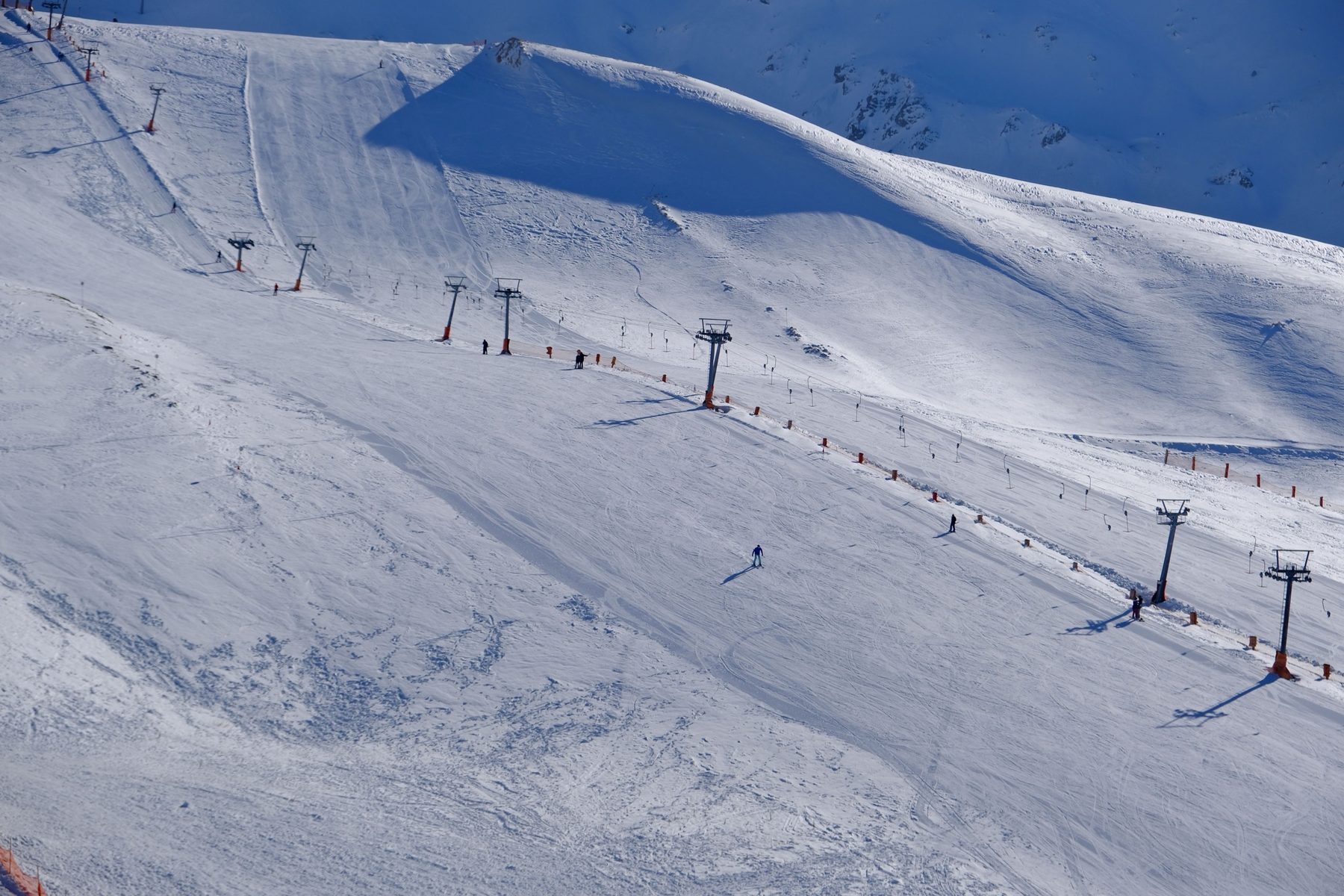
Drag lifts are harder on a snowboard than on skis, and some beginner areas use them. Ask your instructor to practise them with you. Chairlifts and gondolas are much easier: keep your back foot unstrapped, sit down, and lift the board's nose as you get off.
Avoid the flat bits
The one real drawback of snowboarding in the Dolomites is the long flat link sections between some areas. On a board you may need to unstrap and walk. Look at the piste map before you set off, ask locals which links are flat, and keep your speed up before flat sections. Large circuits like the Sella Ronda are best left until you are a confident rider: read our guide to the Sella Ronda for families and beginners.
Rental and kit
- Rent a soft, short board for learning. Rental shops will size it for you.
- Boots matter most. They should be snug with no heel lift.
- Waterproof trousers and gloves: beginners spend a lot of time sitting in the snow.
- Helmet and insurance: both compulsory in Italy. See Dolomites ski rules.
Ski or snowboard?
Skiing is usually easier for the first two days, while snowboarding often clicks quickly after that. Young children generally find skiing easier, and older children and teenagers often prefer the board. If you are not sure, start with skis and try a snowboard lesson later in the week. Our beginner's guide to skiing in the Dolomites explains the ski option.
Rules, prices and dates change every season. We checked them in October 2026 against official sources; always confirm with the ski area or operator before you travel.