Yes, the Dolomites are a very good place to learn to ski. The slopes are famously wide and well groomed, the sun shines more often than in many parts of the Alps, and almost every valley has a beginner area, a ski school and gentle blue runs to move on to. The trick is choosing the right area, because some parts of the Dolomites are much friendlier to first-timers than others.
Why the Dolomites suit beginners
- Grooming: the pistes are prepared every night, so beginners ski on smooth, predictable snow.
- Wide, open slopes: many areas sit on high plateaus and meadows rather than narrow, steep valleys.
- Beginner infrastructure: magic carpets, short practice lifts and dedicated learning zones are common.
- Ski schools everywhere: every main village has at least one school offering group and private lessons in several languages.
- Huts on the slopes: plenty of places to rest, warm up and eat, which matters a lot when you are new.
Best Dolomites ski areas for beginners
Alpe di Siusi (Seiser Alm)
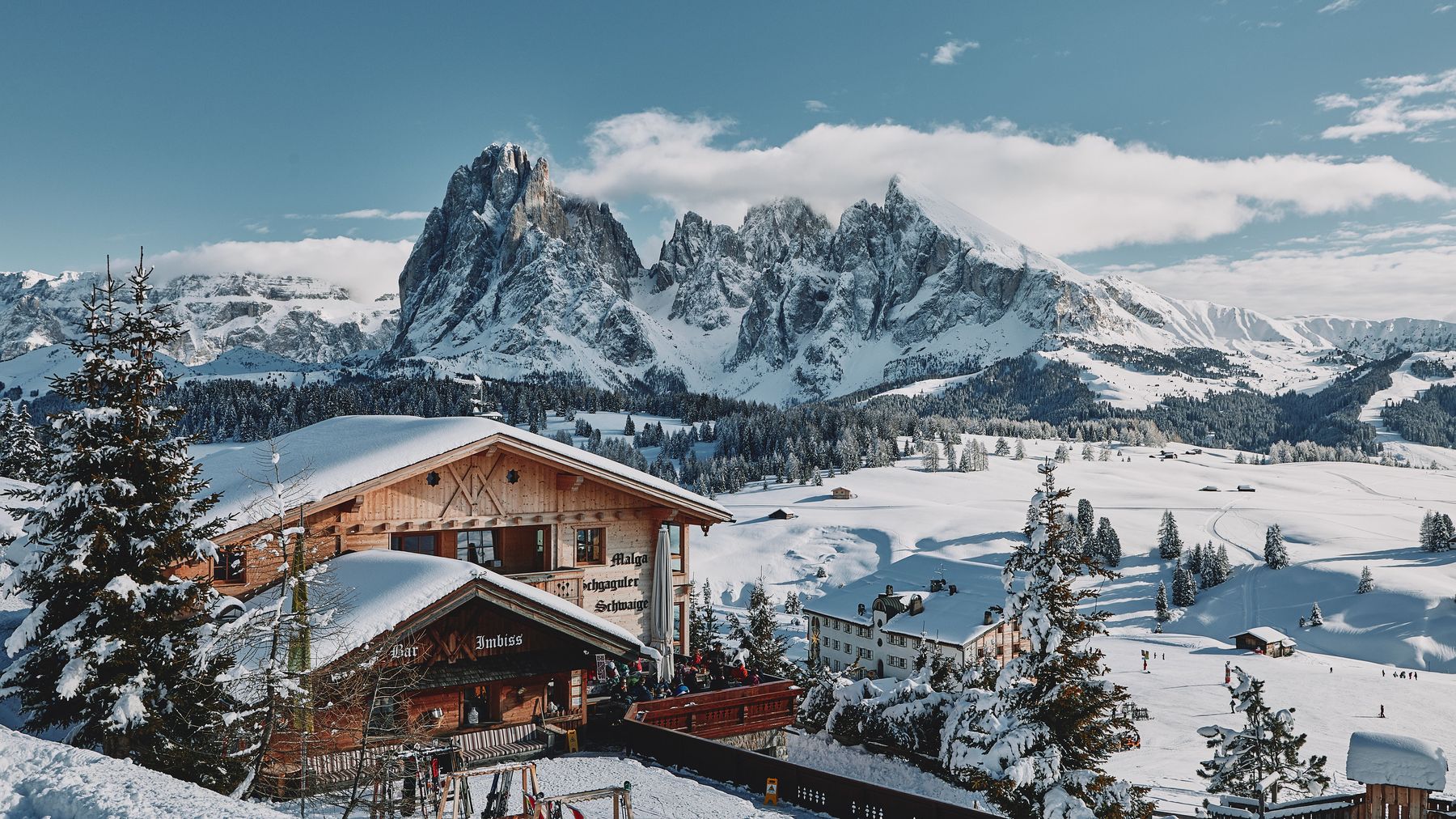
Probably the best area in the Dolomites for learning. The plateau's slopes are wide, sunny and gentle, and the area is officially described as well suited to beginners. You can progress from the village lift in Castelrotto to the easy runs on the alm, with ski schools and a ski kindergarten on hand. It shares 181 km of slopes with Val Gardena, so there is room to grow.
Carezza
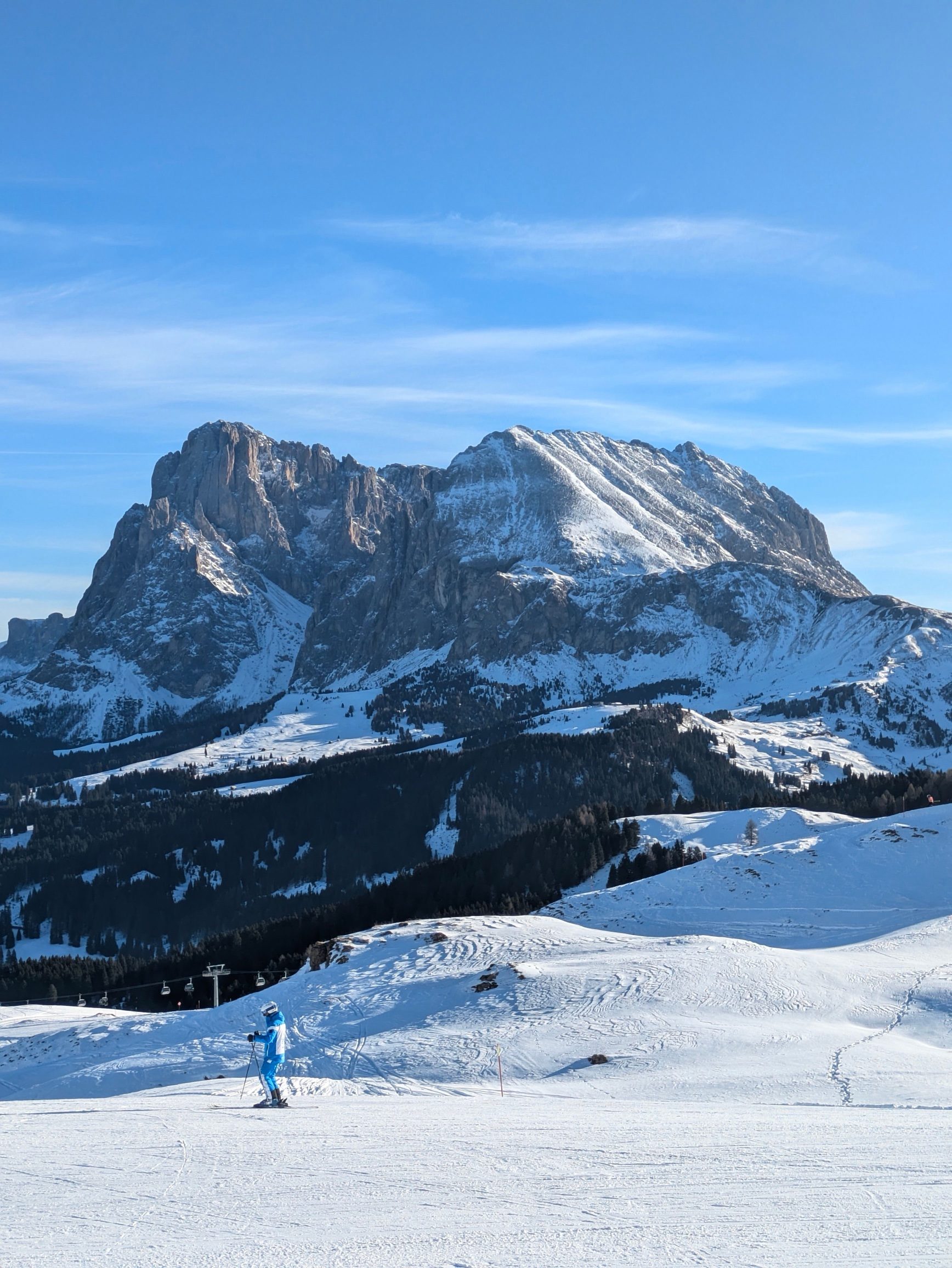
Carezza's lower slopes are blue beginner runs with a magic carpet, and the whole area of around 40 km is compact enough that you will not get lost. It is a relaxed, uncrowded place for a first week on skis.
Obereggen
Obereggen is compact (around 48 km) and well organised, with a supervised learning area and a reputation for excellent grooming. A good choice if you want everything within reach.
Alta Badia
Alta Badia has many easy slopes and beginner areas, six ski schools and some of the best mountain-hut food in the Dolomites. Once you are confident on blues, the Sella Ronda network is right there.
Cortina d'Ampezzo
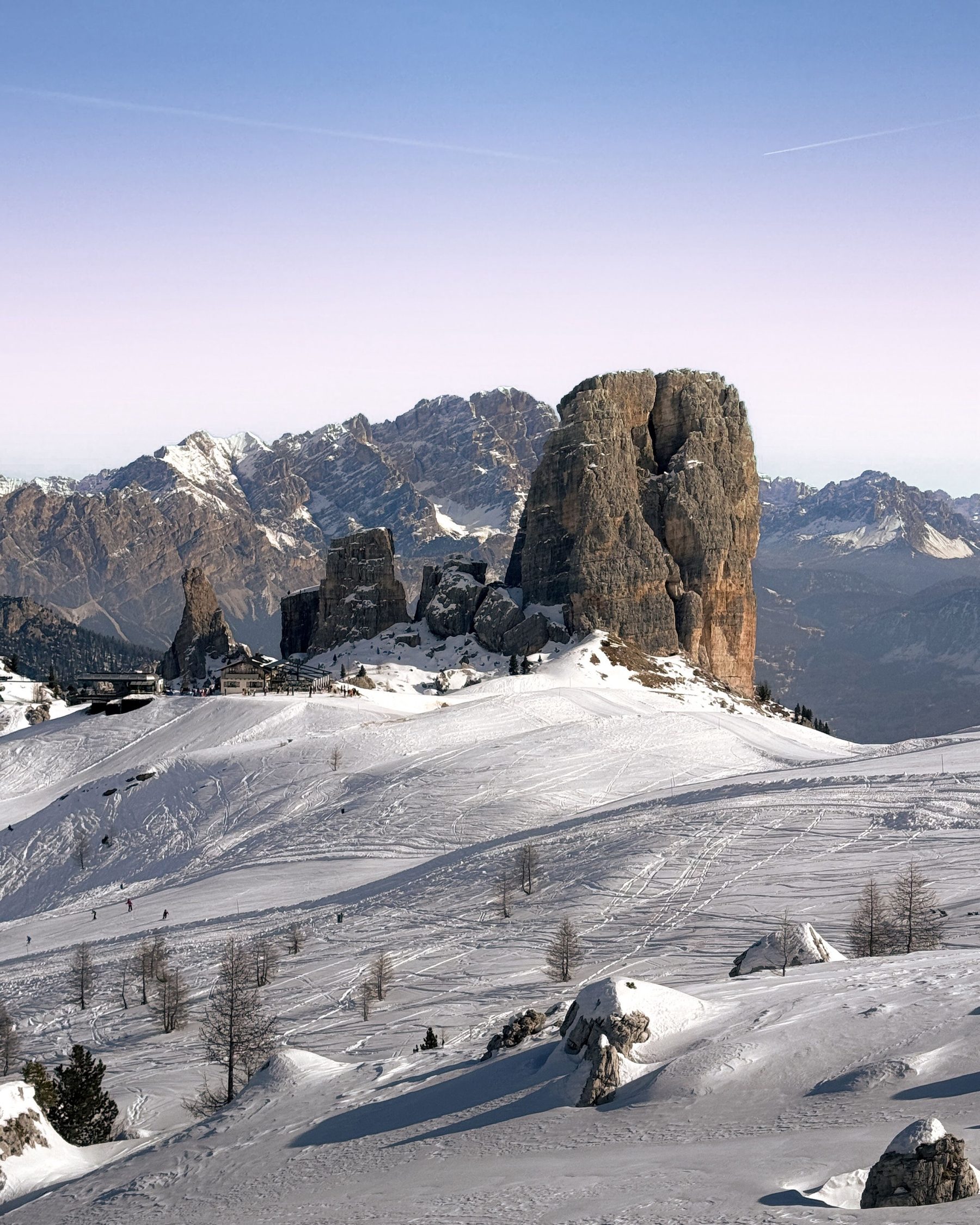
Cortina is better known for its steep Olympic runs, but the Tofane area has 20 blue runs out of 35, and the gentle Pocol and Socrepes slopes are where many visitors start. Cortina's other areas, Faloria-Cristallo and Cinque Torri-Lagazuoi, have far fewer blue runs, so beginners should base themselves near the Tofane.
Understanding the slope colours
Italian slopes use three colours. Blue runs are the easiest and are where you should spend your first days after the beginner area. Red runs are intermediate and can be steep in places. Black runs are difficult and best left until you are very confident. Green is sometimes used for ski-school runs, but most beginners go straight from the learning area to the easiest blues.
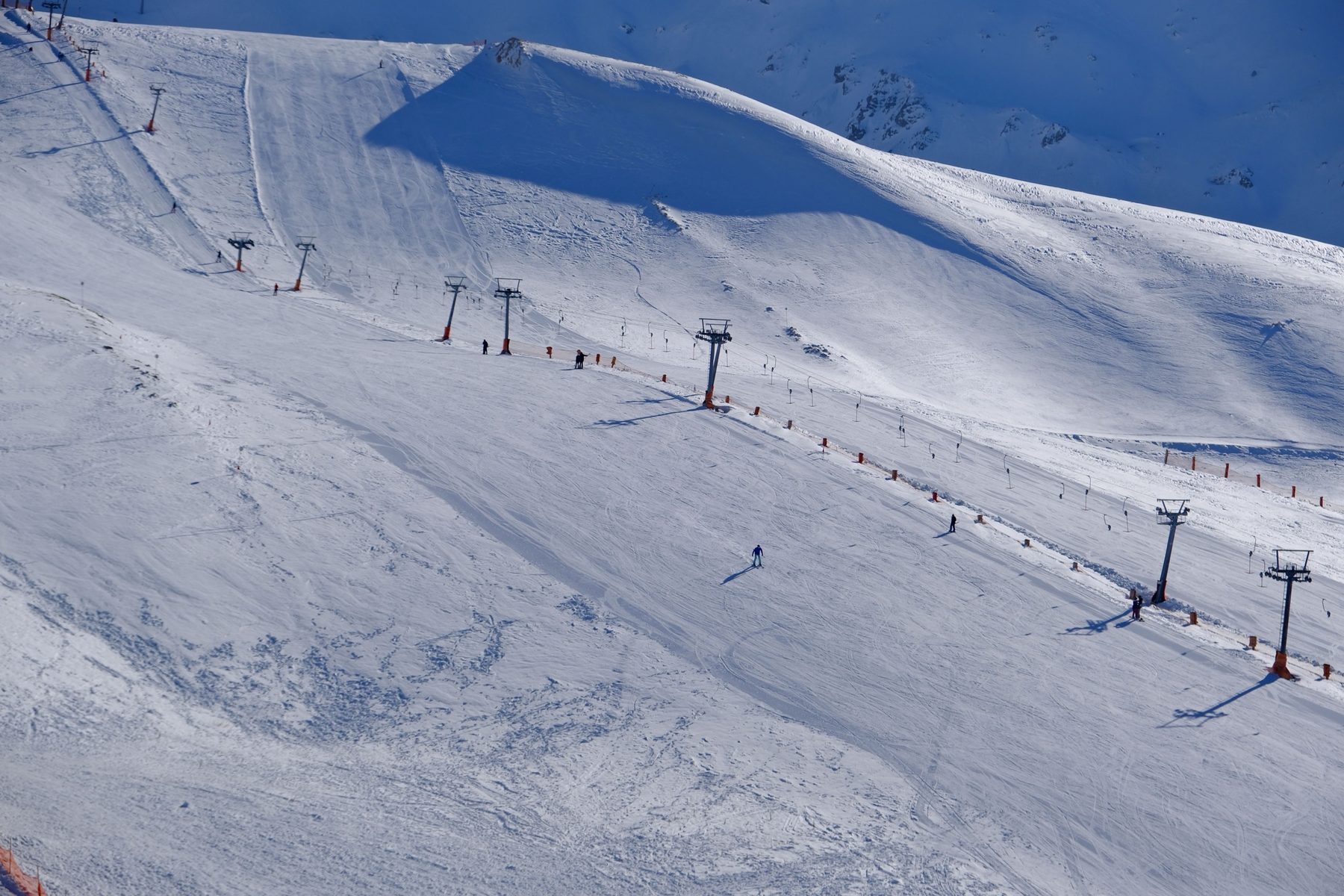
Do not follow a lift just because it looks inviting. Check the piste map for how to get back down: some lifts lead only to red or black runs. Lift staff and ski instructors are happy to point you to the easiest way down.
How many lessons do beginners need?
Most adult beginners do best with a group course over several mornings, typically five half-days during a week. Group lessons are cheaper and sociable; a few private hours are worth adding if you are nervous or progressing slowly. Children usually learn fastest in a ski-school kids' group. See our guide to skiing in the Dolomites with kids.
Do beginners need the full Dolomiti Superski pass?
Not necessarily. The full Dolomiti Superski pass covers twelve ski areas and is great value for confident skiers, but beginners rarely leave their home area in the first few days. Ask locally about passes valid only for a single area or for beginner lifts, which are often cheaper. Once you are skiing blue runs comfortably, upgrading makes more sense.
A sample first week
- Days 1 and 2: group lessons in the beginner area, learning to stop, turn and use the drag lift or magic carpet.
- Days 3 and 4: first blue runs with your instructor, and riding chairlifts.
- Day 5: linking longer blue runs, lunch at a mountain hut, and your first taste of the wider ski area.
- Day 6: ski on your own on runs you know, or take a private lesson to fix one thing.
Staying safe as a beginner
Wear a helmet (compulsory for every skier in Italy since November 2025), stay on marked pistes, and stop at the side of the slope where people above can see you. Our guide to Dolomites ski rules, helmets and insurance covers the essentials.
Thinking about snowboarding instead? Read snowboarding in the Dolomites: best areas and snowparks.
Rules, prices and dates change every season. We checked them in October 2026 against official sources; always confirm with the ski area or operator before you travel.