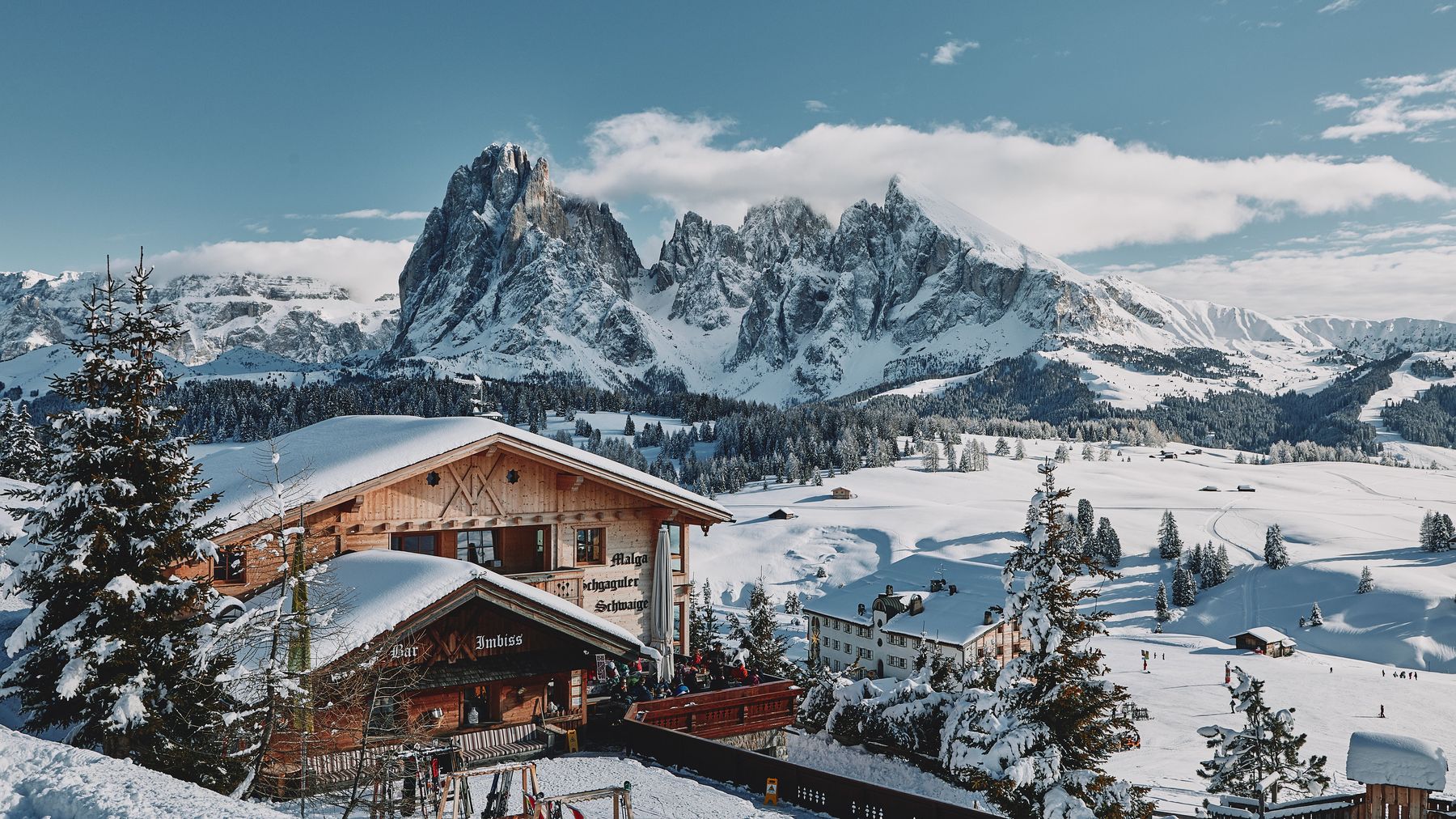
Skiing in the Dolomites means skiing in Italy, and Italy has its own national ski law. Some of its rules surprise visitors: helmets are compulsory for everyone, every skier must be insured, and there is a drink-driving style alcohol limit on the slopes. Here is what the rules are for winter 2026/27, and how to stay safe.
Helmets: compulsory for every age
Since 1 November 2025, a helmet is compulsory for all skiers and snowboarders in Italy, whatever their age. Before that, the rule only applied to under-18s. It covers skiing, snowboarding, telemark and freestyle, and it also applies to sledging. Dolomiti Superski has confirmed that the rule applies for the 2026/27 season.
If you are caught without a helmet you can be fined, and repeat offenders risk losing their ski pass. Helmets can be rented with skis or boards in every resort.
Third-party liability insurance is mandatory
Since 2022, every skier on Italian slopes must have third-party liability insurance (in Italian, responsabilità civile or RC), which covers damage or injury you cause to other people. The rule is still in force for 2026/27.
- It is not included in the ski pass. Ski areas must offer insurance when they sell passes, and you can add daily cover at the ticket office or online.
- Check your existing insurance: some travel, home or alpine club policies already include this cover. Carry proof with you.
- The fine for skiing without it is €100 to €150, and your pass can be withdrawn.
Third-party insurance protects other people from you. It does not pay for your own injuries, rescue or medical costs. Make sure your travel insurance covers winter sports, including helicopter rescue.
Alcohol on the slopes
Italy applies the same alcohol limit on the slopes as on the road: 0.5 grams per litre, checked with a breath test. Skiing under the influence of drugs is banned outright. Fines range from €250 to €1,000, and your pass can be withdrawn in serious or repeat cases. A spritz at lunch is part of the culture, but keep it to one.
The rules of the piste
- Speed: ski at a speed that suits your ability, the slope, the visibility and how busy it is.
- The skier below has priority. If you are coming from above, it is your job to avoid the people downhill.
- No automatic right of way at junctions. Slow down and adjust your line where runs meet.
- Stopping: never stop in narrow sections or below a blind ridge. Stop at the side of the run, and keep your equipment off the piste.
- Piste machines: always give way to snow groomers and service vehicles.
- Snowboarders follow the same rules, and ski areas may limit snowboarding to certain areas.
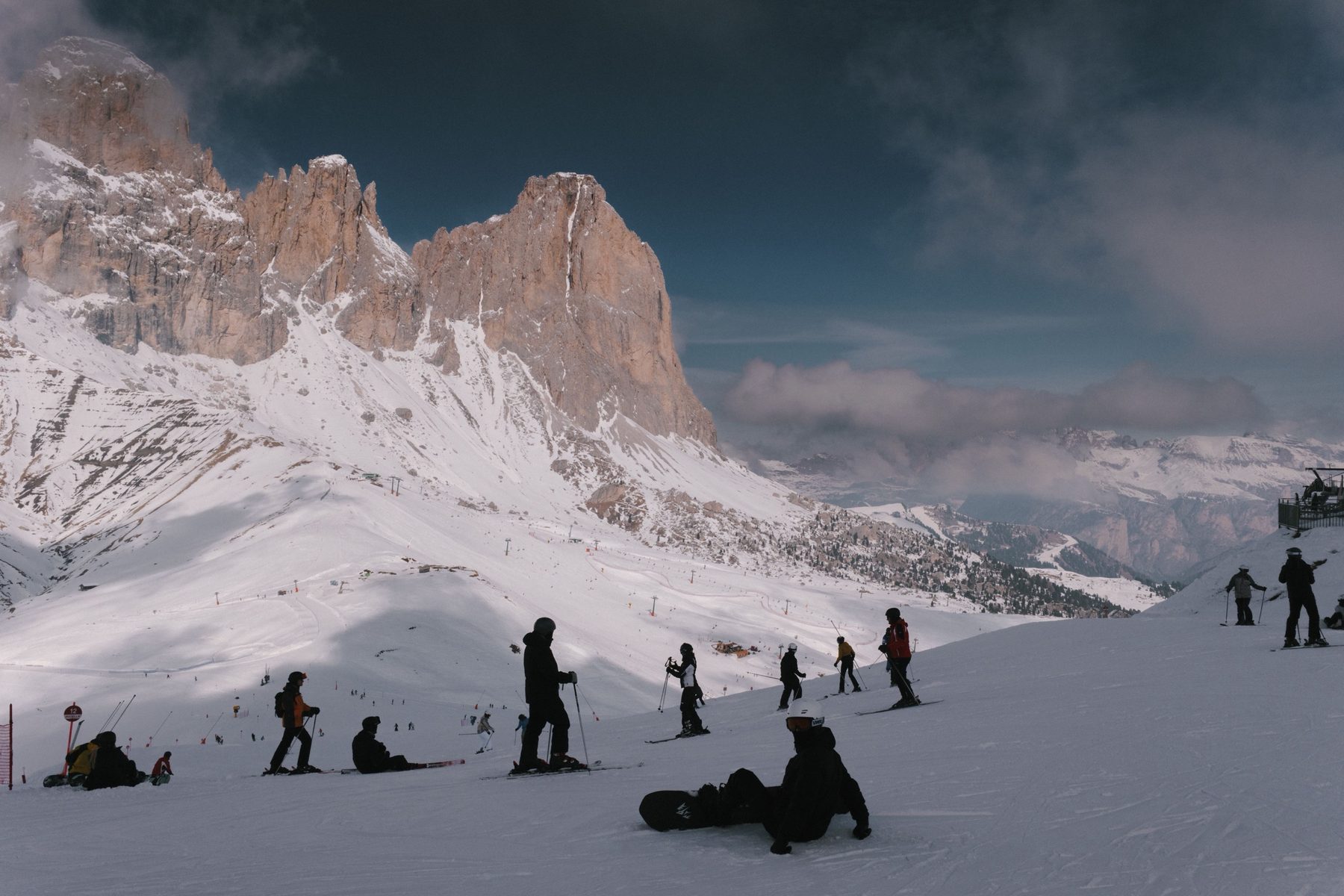
Breaking these rules can lead to fines of €50 to €150, and ski police (often the Carabinieri or state police) patrol the larger areas.
If there is an accident
Everyone involved in or witnessing an accident must stop and help, and give their personal details, whether or not they caused it. Call 112, the European emergency number, or alert the nearest lift operator. Ski areas must have a direct link to emergency services and defibrillators on hand.
Going off-piste or ski touring
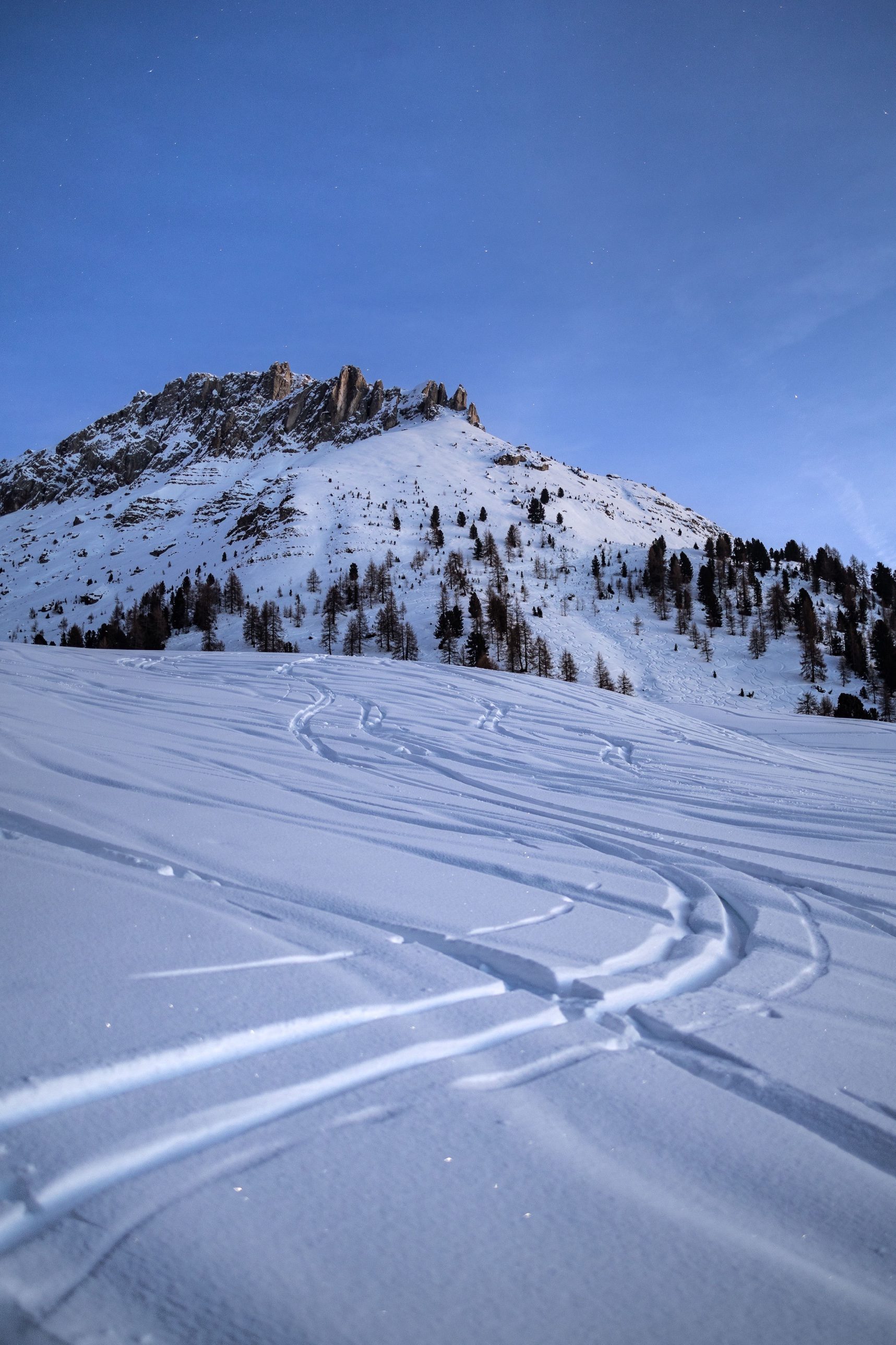
Off-piste skiing and ski touring are allowed, but Italian law requires anyone doing them where there is a risk of avalanches to carry an avalanche transceiver (ARTVA), a shovel and a probe. Fines for not carrying them are €100 to €150. More importantly, knowing how to use them, and reading the avalanche bulletin, is what keeps you alive. If you are not experienced, hire a mountain guide.
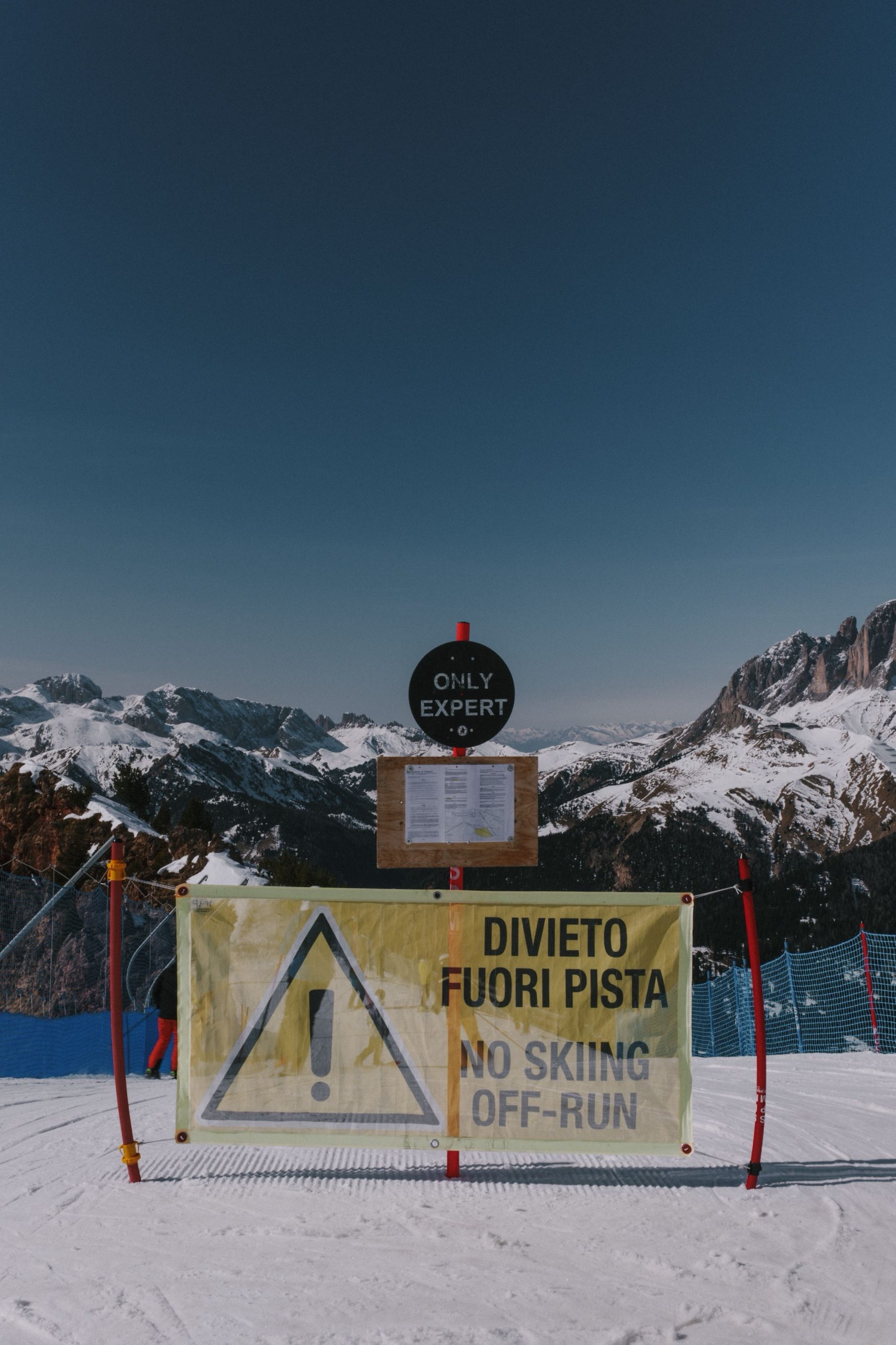
Note also that a 2026 law change allows mountain rescue to be charged where an emergency is caused by intent or gross negligence, although the details had not been finalised at the time of writing.
Slope colours in Italy
Runs are graded blue (easy), red (intermediate) and black (difficult, and often steep or ungroomed). Some ski schools use green for their beginner runs. If you are not sure, ask at the lift: staff will happily point you to the easiest way down. Our beginner's guide to skiing in the Dolomites explains more.
Quick checklist
- Helmet for every skier, snowboarder and sledger in the family.
- Third-party liability insurance, plus travel insurance that covers winter sports and rescue.
- Emergency number saved: 112.
- Avalanche kit and knowledge (or a guide) if you leave the pistes.
Skiing with children? Read our complete guide to skiing in the Dolomites with kids.
Rules, prices and dates change every season. We checked them in October 2026 against official sources; always confirm with the ski area or operator before you travel.