The Dolomites are not one resort but a cluster of valleys, each with its own villages, language and character. Where you stay decides which hikes are on your doorstep, how much driving you do, and whether you can ski straight onto the Sella Ronda. Here is a clear comparison of the main bases, and who each one suits.
The quick answer
- First visit, summer or winter: Val Gardena or Alta Badia.
- Style, shopping and big-name skiing: Cortina d'Ampezzo.
- Families and gentle walking: Alpe di Siusi and Castelrotto.
- Tre Cime, Lago di Braies and a car-free trip: Dobbiaco, San Candido or Sesto.
- Good value and the Marmolada: Val di Fassa.
- Quiet and away from the crowds: San Martino di Castrozza.
Val Gardena: Ortisei, Santa Cristina and Selva
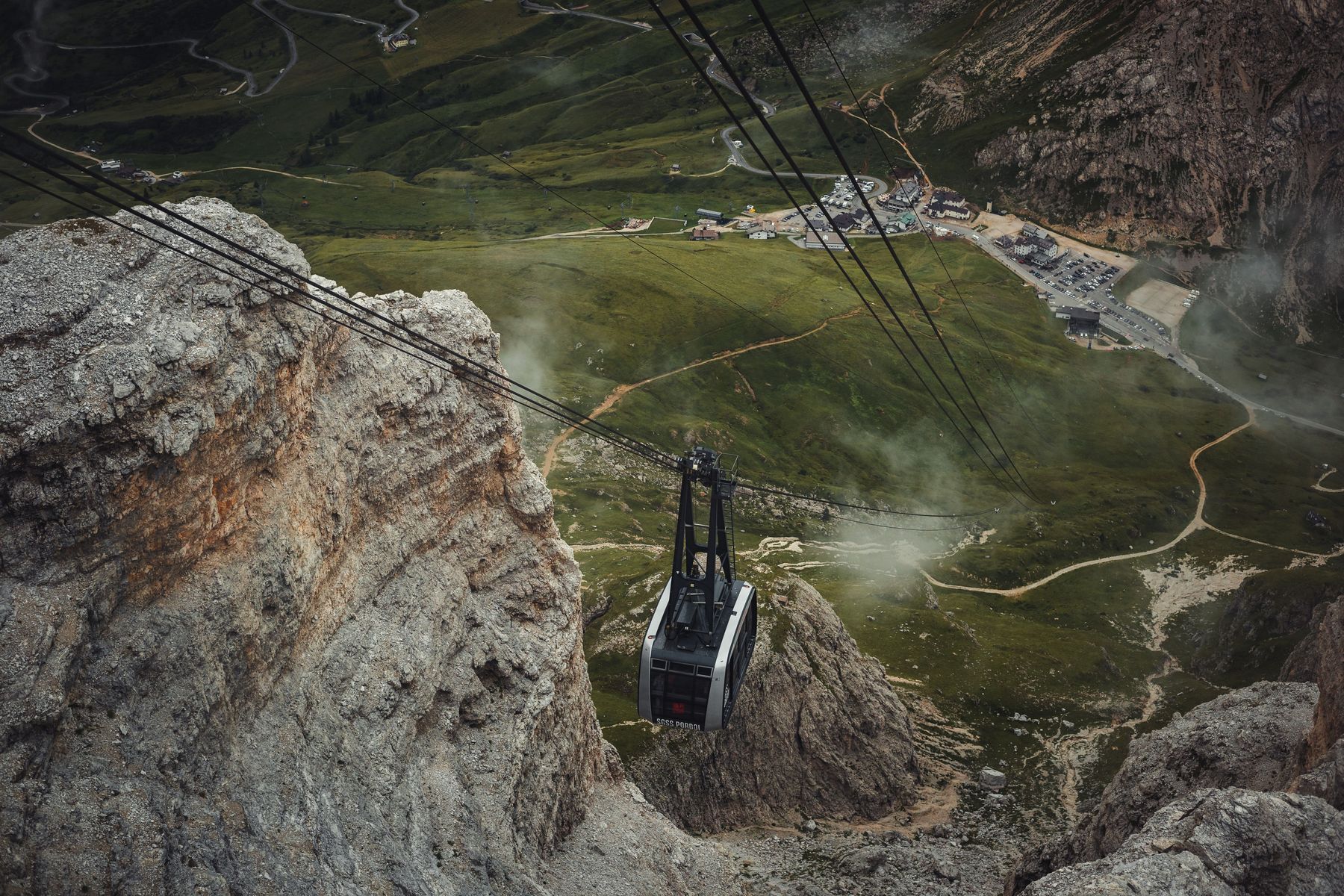
Val Gardena is the classic all-rounder. In summer the cable car from Ortisei takes you up towards Seceda, with its famous jagged ridge above the Odle peaks, and trails lead into the Puez-Odle Nature Park. Sassolungo and Alpe di Siusi are close by.
In winter, Val Gardena and Alpe di Siusi together form the largest ski area in the Dolomiti Superski network, and Santa Cristina and Selva give easy access to the Sella Ronda ski circuit. Selva's Saslong slope hosts World Cup races.
The valley is Ladin-speaking, alongside German and Italian, and famous for its woodcarving. Bolzano airport is about 40 km away, and AltoAdigeBus runs from the main airports. Ortisei is the liveliest village; Selva is closest to the slopes.
Alta Badia: Corvara, La Villa and San Cassiano
Alta Badia is a polished, Ladin-speaking valley known for its food, with Michelin-starred restaurants and excellent mountain-hut cooking. For skiers it is ideal: the area has about 130 km of its own slopes and connects to the Sella Ronda, putting more than 500 km of linked runs within reach. The Gran Risa slope at La Villa is another World Cup venue.
In summer there are hikes to Sassongher, the Pralongià plateau, Lagazuoi, Santa Croce and the wild Fanes plateau. The nearest train station is Brunico, about 30 km away by bus, so most visitors arrive by car.
Cortina d'Ampezzo
Cortina is the most famous town in the Dolomites and the only one that feels like a small city, with designer shops, a busy main street and a long history as a resort. It co-hosted the 2026 Winter Olympics, and its ski area has around 120 km of slopes and one of the longest seasons in the region. Cortina is not on the Sella Ronda circuit.
In summer it is a great base for the Tofane, Cinque Torri, Lagazuoi and the Passo Giau, and the Tre Cime are a short drive away. Cortina has no railway: the nearest stations are Calalzo and Dobbiaco, about 30 to 35 km away, with buses to both. Express buses run daily to Venice airport. Expect higher prices than in the South Tyrol valleys.
Alpe di Siusi and Castelrotto
Alpe di Siusi (Seiser Alm) is Europe's largest high alpine pasture: rolling green meadows under Sassolungo and the Sciliar. It is perfect for families, gentle walkers and cross-country skiers. You can stay up on the plateau, or below in Castelrotto or Siusi and ride the cable car up.
Private cars may only drive onto the plateau before 9:00 and after 17:00 in season (hotel guests get permits), so the meadows stay quiet during the day. The area is mostly German-speaking, with a strong Ladin minority, and is well connected by bus to the Bolzano to Bressanone railway.
Tre Cime area: Dobbiaco, San Candido, Sesto and Misurina
If your must-sees are the Tre Cime di Lavaredo and Lago di Braies, stay in the Alta Pusteria (Hochpustertal). Dobbiaco and San Candido have railway stations, Flixbus connections from Venice and Milan, and a relaxed, Austrian-feeling atmosphere. Sesto sits right under the Sesto Dolomites, and Misurina is the closest base to the Tre Cime themselves.
This is the easiest area to explore without a car. Guests at participating hotels get the Südtirol Guest Pass, which covers regional trains and buses. Note that the Tre Cime shuttle (444) and the summer Lago di Braies buses must be booked separately. The 3 Zinnen ski area is smaller and not on the Sella Ronda.
Val di Fassa: Canazei, Campitello and Moena
Val di Fassa, in Trentino, sits beneath the Marmolada, the highest peak in the Dolomites at 3,343 m, with the Sella, Sassolungo, Catinaccio and Latemar all around. Canazei and Campitello are well placed for the Sella Ronda in winter and for the Pordoi and Sella passes in summer. Moena is one of the larger and livelier villages. The valley is Ladin, and the Ladin Museum is in Vigo di Fassa.
Fassa often offers more choice and better value than its South Tyrol neighbours. Buses run from Bolzano, Ora and Trento railway stations.
San Martino di Castrozza
San Martino sits at 1,450 m below the dramatic Pale di San Martino, inside the Paneveggio–Pale di San Martino Nature Park. A gondola and cable car take you up onto the Pale plateau, a stark, lunar landscape. It is quieter and more traditional than the big valleys, with its own ski area that is not on the Sella Ronda. Treviso and Venice airports are the closest, at around 85 to 110 km, with coach transfers.
Car or no car?
A car gives you the most freedom to explore the passes, but parking is increasingly restricted at the famous spots. If you would rather not drive, choose a base with a station or good bus links: Dobbiaco, San Candido, Bressanone or Brunico, or Val Gardena with its direct airport buses. Many South Tyrol hotels include a guest pass for regional trains and buses. In summer, the Dolomiti Supersummer card covers many lifts across the region (but not the Seceda lifts).
Our pick
For a first trip, Val Gardena gives you the best mix of iconic views, easy hikes, lifts and skiing. Choose Alta Badia for food and polish, Cortina for glamour, and the Alta Pusteria if the Tre Cime are top of your list.
Once you have chosen your base, check what to book in advance and the best time to visit.
Prices, opening dates and access rules change every year. We checked them in October 2026 against official sources; always confirm with the operator before you travel.